
A selection of magazine and scholarly journal articles covering topics such as sustainable food strategies, public health and ethical considerations, and regulating backyard chickens.
Sustainable Practice
How Urban Hens Can Help Cities Become Food Secure – Urban hens enhance food security by providing families with eggs while acting as efficient recyclers of organic waste. Often considered “pets with benefits,” these quiet, low investment birds provide eggs, education and emotional support, and are increasingly allowed in Canadian cities as part of broader, sustainable food strategies.
“How Urban Hens Can Help Cities Become Food Secure.” Macleans, St. Joseph Comm., 15 Jul. 2022, https://macleans.ca/food-insecurity/how-urban-hens-can-help-cities-become-food-secure/.
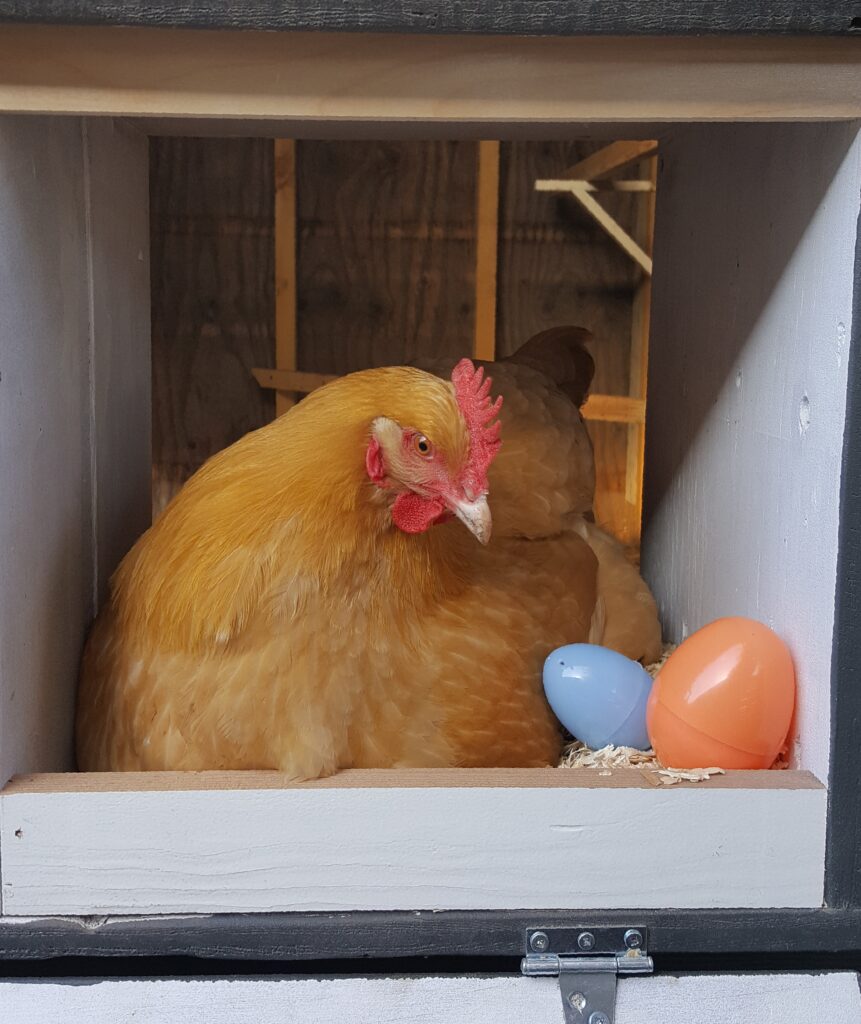
Op-ed: Egg Prices Are Soaring. Are Backyard Chickens the Answer? – Backyard chickens offer a resilient and practical way for families to maintain a steady supply of eggs amid industrial poultry vulnerabilities and avian flu outbreaks, providing ecological resilience and food security despite the costs and care required.
Mark, Jason. “Op-ed: Egg Prices Are Soaring. Are Backyard Chickens the Answer?” Civil Eats [BLOG] Civil Eats, 2025. ProQuest, https://www.proquest.com/blogs-podcasts-websites/op-ed-egg-prices-are-soaring-backyard-chickens/docview/3173437023/se-2.
Nobody Here but us Chickens – Keeping urban backyard chickens is supported in Canadian cities as a means to increase local food production, provide fresh eggs, and foster community. This article reviews the benefits as well as concerns about health risks, predators, and legal restrictions.
Peters, Susan. “Nobody Here but us Chickens.” Canadian Geographic, vol. 130, no. 2, Apr. 2010, pp. 23-24. ProQuest, https://www.proquest.com/magazines/nobody-here-us-chickens/docview/216050755/se-2.
Human-Chicken Connection
Backyard Chickens, Poultry, Pets, or Something in Between? – A recent survey reveals chicken owners’ positive attitudes towards their birds, indicating that the chicken’s role is shifting from livestock to companion animal.
Bates, Mary. “Backyard Chickens, Poultry, Pets, or Something in Between?” Psychology Today, Sussex Pub. LLC, 30 Jan. 2024, https://www.psychologytoday.com/ca/blog/animal-minds/202401/backyard-chickens-poultry-pets-or-something-in-between.
An Ethicist’s Commentary on Backyard Chickens – The author argues that keeping backyard chickens fosters a meaningful human-animal bond by recognizing the birds’ sentience, while urging that care continue even after they cease laying eggs. He proposes that veterinarians support this practice to promote a “traditional husbandry contract”.
Rollin, Bernard E. “An Ethicist’s Commentary on Backyard Chickens.” The Canadian Veterinary Journal vol. 55,2 (2014): 114-5.
Health & Regulation
How Cities are Responding to the Urban Agriculture Movement with Micro-livestock Ordinances – Legalizing and regulating backyard chickens, goats, and bees through clear, straightforward city ordinances supports urban agriculture by addressing common concerns and fostering community benefits such as food security, education, and sustainability.
Bouvier, Jaime. “How Cities Are Responding to the Urban Agriculture Movement with Micro-Livestock Ordinances.” The Urban Lawyer, vol. 47, no. 1, 2015, pp. 85-94,96-117. ProQuest, https://www.proquest.com/scholarly-journals/how-cities-are-responding-urban-agriculture/docview/1728147657/se-2.
Raising Chickens in City Backyards: the Public Health Role – Urban backyard chicken farming, driven by desires for food autonomy and human-animal bonds, necessitates public health attention regarding zoonotic risks, waste management, and nuisance issues, similar to pet management. While offering benefits in well-being and education, the practice lacks, and requires, specific urban public health guidance, say the authors.
Pollock, S L et al. “Raising chickens in city backyards: the public health role.” Journal of community health, vol. 37,3 (2012): 734-42. https://doi.org/10.1007/s10900-011-9504-1.
Backyard Chickens – A Cross-Sectional Survey of Current and Prospective Backyard Chicken Owners in Ontario (2019-2021) – Humans and pets may be at increased risk of illness due to contact with poultry, their eggs, and their environment. This study identifies knowledge, attitude, or practice gaps among current and prospective backyard chicken owners.
Paphitis, Katherine, et al. “Backyard Chickens – A Cross-Sectional Survey of Current and Propective Backyard Chicken Owners in Ontario (2019-2021).”The Canadian Veterinary Journal, vol. 64,1 (2023): 54-62.
6 tips for Your Clients with Backyard Chickens – Top tips from vets about proper care for backyard chickens, including foraging opportunities, temperature management, diet considerations, and precautions against diseases to ensure their health and well-being.
“6 Tips for Your Clients with Backyard Chickens.” Veterinary Medicine, vol. 110, no. 5, 2015, pp. S2-S3. ProQuest, https://www.proquest.com/scholarly-journals/6-tips-your-clients-with-backyard-chickens/docview/1689989659/se-2.
Are Backyard Chickens a Serious Risk for Transmitting Bird Flu to Humans? – Backyard chickens can pose a risk for transmitting bird flu to humans. This article discusses the risks and biosecurity practices owners should be aware of and advises on flock monitoring and steps for disease prevention.
Wilcox, Meg. “Are Backyard Chickens a Serious Risk for Transmitting Bird Flu to Humans?” Civil Eats [BLOG] Civil Eats, 2025. ProQuest, https://www.proquest.com/blogs-podcasts-websites/are-backyard-chickens-serious-risk-transmitting/docview/3290425151/se-2.